George Livingston M.S. in Biochemistry

Introduction
The challenges of implementing pharmacogenomics (PGx) into common practice in the medical field can be categorized as social, ethical, or legal [2]. Social issues in PGx have a lot to do with public perceptions of the practice, for the general population has very little working knowledge of this emerging field [2]. Public school systems in many first world countries integrate genetics as a standard in their instruction, but there is usually not a discussion related to PGx until graduate school [6]. With such a small percentage of the population pursuing graduate level degrees and an even smaller percentage of that group working towards a biological science graduate degree, the word PGx means nothing to the general population [7]. Another social dilemma is race; since education is part of the problem, statistically speaking, many African Americans and Hispanics do not make it to graduate school compared to Caucasians [7]. Ethical problems that the field of PGx faces are patient consent in research, ownership of new discoveries/information, and the duty to warn patients of drug-gene interactions [8]. Legal issues that hinder the advancement of PGx are within the policies that have to be updated or created to address the aforementioned ethical issues [8].
Significance
In the United States alone, an average of 2 million adverse drug reactions occur every year, around 100,000 of which are fatal [9]. A study estimated that 30% of these adverse reactions could be prevented if PGx testing was used [9]. Imagine preventing 1 out of 3 adverse reactions, and some of those saving the patient’s life. The efficacy of PGx is astounding.
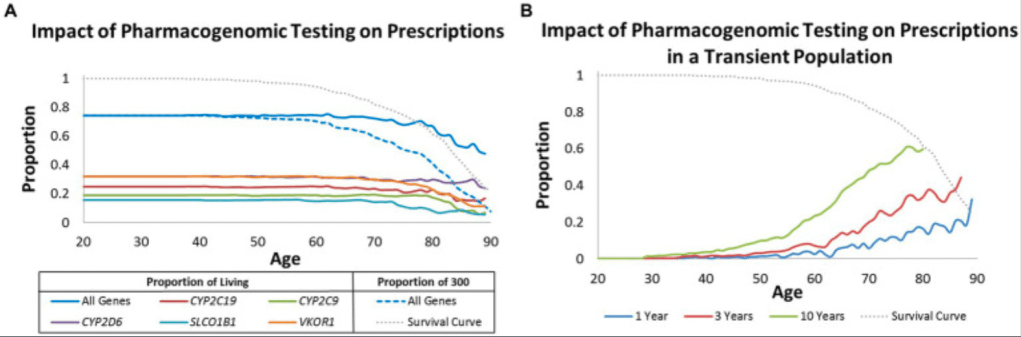
Social Issues and Solutions
Acceptance that PGx is here to stay is a big step in the right direction for healthcare professionals, and this is a step that has already occurred in most medical practices. However, getting the general population to understand the purpose and application of PGx in their treatment plans is yet to be accomplished [6,7]. The problem is clear; the public needs more education on PGx. To help rectify this issue, children should be educated on PGx sometime in high school, potentially in a required biology course. The fine details of PGx do not need to be highlighted, but students should gain a generic understanding because they will better understand their treatment plan as PGx becomes more integrated in patient care [2].
Pharmacist’s Perspective: Samuel Statler, PharmD
It is evident that PGx education is an issue, and that health care professionals who prescribe medications are tired of the standard of care being trial and error. An interview (conducted by George Livingston in 2024) with a pharmacist, Samuel Statler (S.S.), in Florida illuminates some of the issues:
1. Where do you currently work as a pharmacist?
S.S. – “Walmart Pharmacy Port st. Lucie, Fl”
2. What is the average amount of patients that you provide medications to?
S.S. – “Average ~ 250 patients/day”
3. If you were to pick one of your patients at random, what are the odds that they would know the importance and applications of PGx?
S.S. – “Roughy 1/20 would have an idea about PGx because of myself my partner or their physician.”
4. Does your pharmacy promote PGx for patients who take medications that could be contraindicated for certain polymorphisms?
S.S. – “Not really. Typically patients have to find out the hard way of trial and error. In certain populations we do not dispense meds that have the potential for adverse reactions due to gene expression (eg codeine for children).”
5. What do you think are the biggest challenges for your pharmacy in implementing PGx, and can you speak on why you believe these challenges exist?
S.S. – “The most difficult part about PGx is access. Insurance companies do not cover blood panels or genetic tests, so prescribing medications is almost always done blindly. If there were more access to genetic testing we could take a prophylactic approach to medication therapy management instead of trial and error.”
Combating Ethical and Legal Dilemmas
PGx has a few different ethical issues associated with its practice, but there is one question that should always be asked in the healthcare field. What is best for the patient? One big issue involving the research aspect of PGx is consent [8]. Policy makers have to decide if open consent or informed consent is the best practice for research purposes in PGx [8]. Open consent would be the best practice because it would allow researchers to data mine for PGx studies [8]. Hospitals may have leftover samples from blood draws, procedures, or corpses that could be used in genetic studies, and reaching out to each individual patient or family for an informed consent for each individual study is not practical [8]. Ownership of new discoveries and data in PGx are valuable and can claim to be owned by the organization or entity that discovered them. However, having knowledge that could save someone’s life or improve their health is an ethical issue. A policy that states new discoveries in this field should be open access would be the right decision, but this is a matter of opinion. The recognition of new discoveries is important, and they merit awards and/or monetary incentives, but the sale of information to the public that could save lives is an atrocity [8]. Members of the litigious community should take up arms in this fight to ensure the open access of information. As part of the Hippocratic oath, physicians have vowed to do no harm, so they have a duty to warn patients if their genetics will predispose them to adverse drug reactions if the information is accessible and genetic testing is available. Therefore, the medical community should embrace the use of PGx [2]. Implementation will take the support of healthcare providers and insurance companies, which means more policies should be put into place to allow coverage for genetic testing.
Conclusion
PGx is an important emerging branch of medicine, and it has several challenges. Some of these challenges are social, ethical, and legal. From a social standpoint, education is highly important. Without a working knowledge of PGx, patients and clinicians will miss out on opportunities for better treatment plans. Ethical challenges involve consent for specimen use in large studies that use leftover blood from sampling, surgery, or death. Another large ethical dilemma is ownership of discoveries. Private entities should not own information that could improve a portion of the population’s health. Legal challenges involve the inevitable debate that will come when establishing guidelines for the ethical issues. Patient care should always be at the center of any of these discussions because the mission of medicine is to care for the patient.
References:
[1] Dere WH, Suto TS. The role of pharmacogenetics and pharmacogenomics in improving translational medicine. Clin Cases Miner Bone Metab. 2009 Jan;6(1):13-6. PMID: 22461092; PMCID: PMC2781217.
[2] Bertino, J. S., Kashuba, A., Ma, J. D., Fuhr, U., DeVane, L. C. (2013). Handbook of Clinical Pharmacogenomics An Introduction and Clinical Perspective (Kindle Edition). McGraw-Hill Medical.
[3] Ferrell PB Jr, McLeod HL. Carbamazepine, HLA-B*1502 and risk of Stevens-Johnson syndrome and toxic epidermal necrolysis: US FDA recommendations. Pharmacogenomics. 2008 Oct;9(10):1543-6. doi: 10.2217/14622416.9.10.1543. PMID: 18855540; PMCID: PMC2586963.
[4] Gummadi AC, Guddati AK. Genetic Polymorphisms in Pharmaceuticals and Chemotherapy. World J Oncol. 2021 Oct;12(5):149-154. doi: 10.14740/wjon1405. Epub 2021 Oct 5. PMID: 34804277; PMCID: PMC8577603.
[5] De Marchis EH, Doekhie K, Willard-Grace R, Olayiwola JN. The Impact of the Patient-Centered Medical Home on Health Care Disparities: Exploring Stakeholder Perspectives on Current Standards and Future Directions. Popul Health Manag. 2019 Apr;22(2):99-107. doi: 10.1089/pop.2018.0055. Epub 2018 Jun 19. PMID: 29920148; PMCID: PMC6459267.
[6] Haga SB, Moaddeb J. Pharmacogenomics courses in pharmacy school curricula. Pharmacogenomics. 2019 Jun;20(9):625-630. doi: 10.2217/pgs-2019-0024. PMID: 31250728; PMCID: PMC6912845.
[7] Posselt JR, Grodsky E. Graduate Education and Social Stratification. Annu Rev Sociol. 2017 Jul;43:353-378. doi: 10.1146/annurev-soc-081715-074324. Epub 2017 May 3. PMID: 30662143; PMCID: PMC6335048.
[8] Gershon ES, Alliey-Rodriguez N, Grennan K. Ethical and public policy challenges for pharmacogenomics. Dialogues Clin Neurosci. 2014 Dec;16(4):567-74. doi: 10.31887/DCNS.2014.16.4/egershon. PMID: 25733960; PMCID: PMC4336925.
[9] Lorenz, R. The Pharmacogenomics Data Are In So Why Is Adoption Still Lagging?. Pharmacy Times. 2023 Jun 14. https://www.pharmacytimes.com/view/the-pharmacogenomics-data-are-in-so-why-is-adoption-still-lagging-.
[10] Ye Z, Mayer J, Leary EJ, Kitchner T, Dart RA, Brilliant MH, Hebbring SJ. Estimating the efficacy of pharmacogenomics over a lifetime. Front Med (Lausanne). 2023 Oct 31;10:1006743. doi: 10.3389/fmed.2023.1006743. PMID: 38020121; PMCID: PMC10645151.
 Livingston Learning
Leave a comment